
Every entrepreneur has sat through a
networking event, collected a stack of business cards, and gone home with...
nothing. A LinkedIn connection that never replies. A WhatsApp group that goes
silent after the third day. The problem isn't networking itself — it's that
most networking has no accountability built into it.
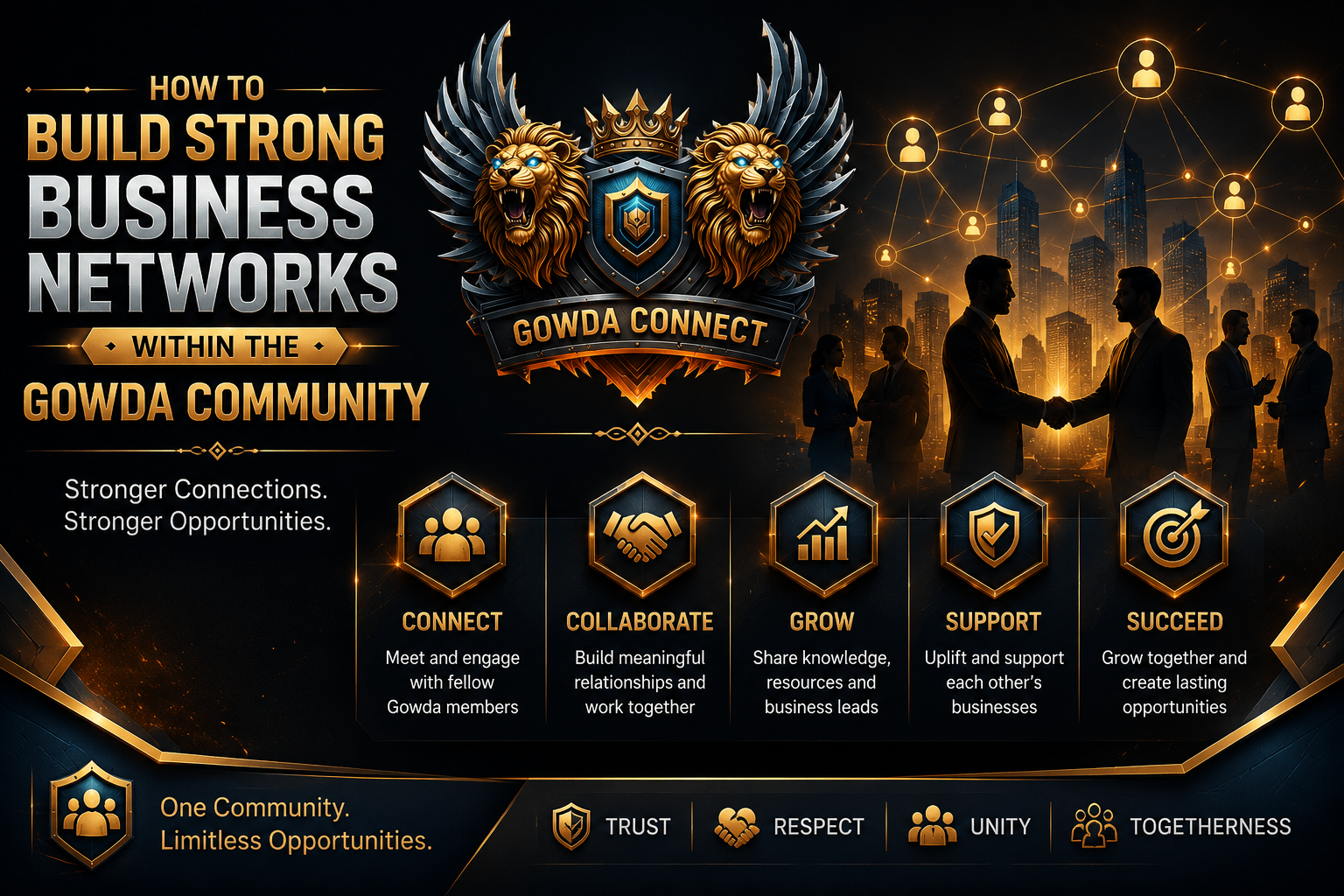
This is the gap that verified,
community-based platforms like Gowda Connect are built to close. Here's a
deeper look at why trust-based
networks outperform open, unverified ones — and how to actually measure the
return you're getting from being part of one.
1. Cold Outreach vs. Warm Referral: The Real Numbers
Sales and marketing research consistently
shows the same pattern across industries:
·
Cold outreach (cold calls, cold emails,
unsolicited LinkedIn messages) typically converts at 1–3%.
·
Warm referrals — an introduction from
someone the prospect already trusts — convert at 30–50% or higher.
·
Referred customers also tend to
have a higher lifetime value and lower churn, because the trust of the
referrer transfers to the relationship from day one.
The math is simple: a referral isn't just
a lead, it's a lead that arrives pre-qualified with borrowed trust. That's the
entire value proposition of a referral-exchange model — every member vouching
for another member is effectively transferring their own reputation into the
introduction.
2. Why "Verified" Matters More Than "Large"
A directory with 100,000 unverified
profiles is often worth less than one with 5,000 verified ones. Verification
does three things a large, open network can't:
1.
Filters out noise — no fake businesses,
no dormant profiles, no scraped listings.
2.
Raises accountability — members know
their behavior reflects on a real, checkable identity within a community
they'll keep encountering.
3.
Compounds trust over time — every
successful referral or transaction between two verified members strengthens the
credibility of the network as a whole, not just the two people involved.
This is why a smaller, curated community
— like a regional or community-specific network — can often out-produce a
generic, sprawling one on a per-member basis.
3. Turning a Membership Into a Referral Engine (Not Just a Directory
Listing)
Simply signing up and completing a
profile is the equivalent of printing a business card and leaving it in a
drawer. To actually generate referrals, members need a system. A few practical
habits that separate active networkers from passive ones:
·
Give before you ask. The members who
receive the most referrals are almost always the ones who send referrals first.
Referral networks run on reciprocity, not requests.
·
Be specific about what you need.
"I'm looking for clients" gets vague results. "I'm looking for
introductions to HR heads at IT companies with 200+ employees" gets you a
real name within days.
·
Follow up within 48 hours. Referrals
have a shelf life. A warm introduction that sits unanswered for two weeks has
usually gone cold.
·
Close the loop. Tell the person who
referred you what happened — even if it didn't convert. This is what keeps
referral relationships alive long-term.
·
Show up to events with a goal, not just
a stack of cards. Decide in advance which 3–5 people you want to meet based on
the attendee list or industry focus.
4. Matching
Membership Tier to Business Stage
Not every business needs the same level
of access, and choosing the right tier affects how quickly you see ROI:
·
Early-stage or solo entrepreneurs
typically get the most value from directory visibility and community forum
access — the goal at this stage is discoverability, not scale.
·
Growing businesses with a sales pipeline
benefit most from priority referral placement and featured listings, since the
marginal value of an extra qualified lead is higher once you have the capacity
to serve it.
·
Established companies tend to extract
the most value from higher-tier access — dedicated account support, speaking
slots at flagship events, and industry insight reports — because their
bottleneck is usually strategic positioning and brand visibility, not lead
volume.
5. Events: The
Underused Multiplier
Most members treat events as optional.
The data on professional communities suggests otherwise — face-to-face
interaction converts relationships into referrals far faster than digital-only contact, because:
·
Trust signals (tone, body
language, shared context) are transmitted instantly in person, where they take
weeks to build over chat.
·
Speed-networking formats
compress what would normally take months of back-and-forth into a single
afternoon of structured introductions.
·
Masterclasses and summits
create a shared experience members can reference later ("we met at the
Business Summit") — a natural, low-friction way to re-open a conversation
months afterward.
If you're only engaging with a community
online, you're likely leaving the majority of its value on the table.
6. A Simple Framework to Track Your Own Networking ROI
Most members never measure whether their
networking is actually working. A basic quarterly framework:
Metric | What |
Referrals given | Number of introductions/leads you |
Referrals received | Number of introductions/leads sent to |
Conversion rate | % of received referrals that became |
Revenue attributed | Total revenue traceable to |
Reciprocity ratio | Referrals given ÷ referrals received |
Tracking this for even two quarters
usually reveals which activities (events, forum posts, direct referrals) are
actually driving business — versus which ones just feel productive.
The Bottom Line
Business networking isn't a marketing
channel you switch on — it's an ecosystem you compound over time. The
entrepreneurs who get outsized returns from communities like Gowda Connect
aren't the ones with the flashiest profile; they're the ones who treat referrals
as a two-way system, show up consistently, and measure what's actually working.
Trust is slow to build and expensive to
fake — which is exactly why, once built, it's the hardest competitive advantage
for anyone outside the network to replicate.
Gowda
Connect is India's premier Gowda business networking platform, connecting
12,500+ verified members, 3,400+ businesses, and 180+ community events across
industries including Real Estate, IT Services, Finance, Healthcare, and more.